
To catch up when you are behind on lectures, first keep up with this week's lectures so the backlog stops growing, then sort the missed ones by how heavily they are examined and how well you know them, and work through the most important ones from notes and transcripts rather than rewatching every hour at normal speed. You rarely need to catch up on everything equally. You need to catch up on what the exam asks.
First, stop the gap from growing
The instinct when you are behind is to go back to week one and work forwards. That usually makes things worse: while you catch up on old lectures, this week's pile up too.
Turn it around. Go to this week's lectures, or watch them the same week, and keep up from today. Then catch up on the backlog in separate, planned sessions. A backlog that stays the same size is a problem you can solve; one that keeps growing is not.
Triage the lectures you missed
List every lecture you are behind on. For each one, check the module's learning outcomes and past papers, then sort it into one of four groups.
| Group | What it means | What to do |
|---|---|---|
| Heavily examined, not understood | Core material you do not know yet | Study it properly: notes, then questions |
| Heavily examined, partly known | You know the outline but not the detail | Read the notes, then go straight to flashcards or a quiz |
| Lightly examined | Comes up rarely or for few marks | Read a summary and make a few cards |
| Not examined | Background or optional | Leave it for now |
Start with the first group. It is where catching up earns the most marks.
How to catch up when you are behind on lectures, step by step
- Keep up with this week so the backlog stops growing.
- List and triage every missed lecture, using the table above.
- Plan the backlog into specific sessions, for example two missed lectures each weekday, starting with the most heavily examined.
- Read before you watch. Skim the slides or the transcript first. Often that is enough, and you only need to replay the parts you did not follow.
- Turn each lecture into questions as soon as you have caught up on it, and start reviewing them the next day.
- Ask for help early. A short question to a lecturer, a tutor or a classmate can save hours. If you are behind for a reason outside your control, talk to your university's student support about extensions or other options.
Study from transcripts, not from replays
Rewatching ten hours of lectures at normal speed takes ten hours, and most of it is material you could read in a fraction of the time. A transcript and notes let you skim what you already know and slow down only where you need to. When you do listen, play the audio faster and jump straight to the moment you need.
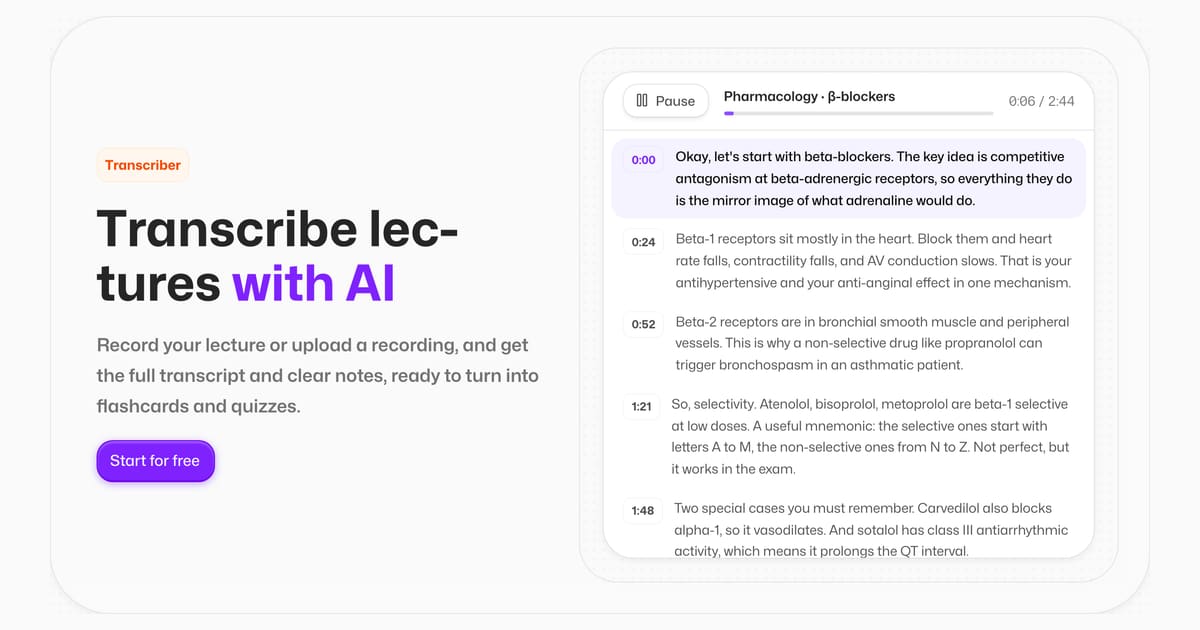
For the lectures still to come, record them on your phone or in the browser, up to two hours each, so you never have to rely on memory or someone else's notes again. Check your university's rules on recording first. The notes for a recorded lecture are written automatically, and you can turn them into flashcards that jump to the moment they came from.
Then make sure it stays caught up
Catching up is pointless if you forget it by the exam. Every lecture you catch up on should end with flashcards or a few practice questions, reviewed with spaced repetition along with the current week's material. A daily session of a few minutes keeps both the backlog and the new lectures alive.
Once you are back on track, look at the term as a whole: how to study for university exams shows how to plan backwards from your exam dates, and how to take notes in university lectures helps you keep up from here.
The short version
- Keep up with this week first, so the backlog stops growing.
- Triage missed lectures by how heavily they are examined and how well you know them.
- Study from transcripts and notes, replaying only what you need, faster.
- End every caught-up lecture with flashcards you review daily.


