
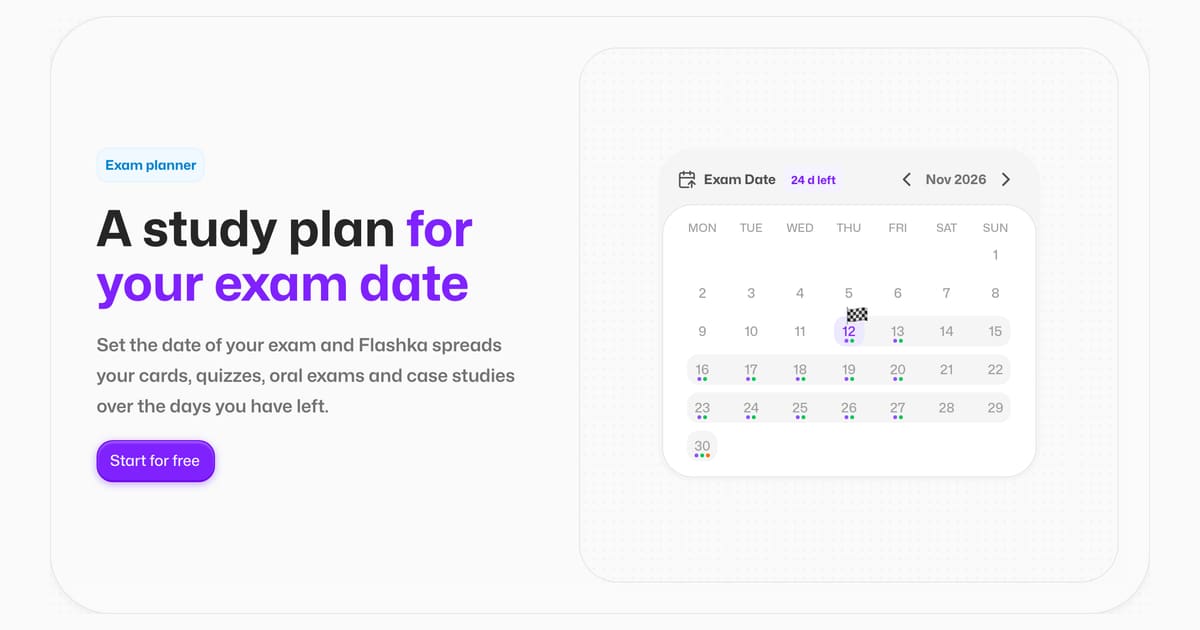
Start studying for an exam as soon as the material is taught, and seriously at least two to three weeks before a midterm, four to six weeks before a final, and several months before a board or bar exam. Starting early does not mean studying more; it means the same hours spread thinner, so every topic comes back several times before the day. Here is when to start studying for an exam, and what each week should look like.
Why an early start matters more than long hours
Memory fades fast after you learn something, and each time you recall it again, it fades more slowly. That is the spacing effect, and it is why spaced repetition apps bring each card back just before you would forget it. Our guide to spaced repetition explains the idea in full.
Spacing needs calendar days, not hours. Ten hours spread over three weeks gives each topic several returns; the same ten hours in the last two days gives it one. The second feels faster, but much of it is gone a week later.
So the real question is not how many hours you need. It is how many days you need for each topic to come back three or four times.
When to start studying for an exam: a rule of thumb
| Exam | Start studying | Why |
|---|---|---|
| Weekly quiz or class test | 3 to 5 days before | Little material; two or three reviews are enough |
| Midterm | 2 to 3 weeks before | Several weeks of lectures to learn and revisit |
| Final exam | 4 to 6 weeks before | A whole course, often cumulative |
| Several finals at once | 6 to 8 weeks before the first | Subjects have to share your days |
| Board, bar or entrance exam | 3 to 6 months or more | Years of material, tested in depth |
Move these earlier if the subject is new to you or heavily weighted, and later if you have kept up with reviews all term. Students who make flashcards after each lecture and review a little every day are, in effect, always studying for the exam.
A spaced repetition timeline for a final exam
Here is how six weeks before a final might run. Shorter timelines compress the same stages.
Weeks 6 to 4: learn and make cards
Work through the course a topic at a time. After each one, make flashcards or questions from it and start reviewing them the next day. New cards most days, reviews every day.
Weeks 3 and 2: keep reviewing, start testing
Finish the new material. Add quizzes on whole topics, so you practise answering questions you did not write yourself. Turn every mistake into a new card.
The last week: practise like the exam
No new topics. Sit a timed mock exam early in the week, then fix what it shows. Keep your daily reviews going. The night before, make one quick pass through every card, then sleep.
Already inside the last week? Here is how to study for an exam in one week. Several exams at once? Build a finals study schedule first.
How to actually start
Knowing when to start is easy. Starting is the hard part. A few things help:
- Make the first session tiny. Twenty minutes on one lecture. Starting is the hurdle, not the length.
- Decide the task the night before. Not 'study biology' but 'make cards from lecture 4 and review them'.
- Study at the same time each day. A habit removes the daily decision.
- Let something else hold the plan. A task for today that you did not have to choose is easier to begin.
That is what spaced repetition does day to day: you open the app, and the cards that are due are already waiting.
The short version
- Start 2 to 3 weeks before a midterm, 4 to 6 weeks before a final, and months before a board exam.
- An early start is not more work; it is the same work spread so each topic comes back several times.
- Learn and make cards first, then add quizzes, then finish with mock exams and reviews only.
- Make the first session small, and decide each day's task in advance.


